This page sets out how the Courts Service is organised and led.
Leadership and structure
The Courts Service is led by the Chief Executive Officer, who manages the staff and day-to-day business of the Service and is also the Accounting Officer. The Chief Executive Officer, together with the Assistant Secretaries and Principal Officers set out below, makes up the Senior Management Team.
Assistant Secretaries
Assistant Secretaries with responsibility for:
- Superior Court Operations
- Circuit and District Court Operations
- Strategy and Reform
- Corporate Services
- Information and Communications Technology (ICT) — the role is titled Chief Information Officer
Principal Officers
- Head of Strategic Human Resources
- Head of the Office of the CEO
- Head of Communications
- a representative of Courts Service Principal Officers
The diagram below provides an overview of the Courts Service’s governance arrangements and senior organisational structure, including the relationship between the Courts Service Board, its committees, the Chief Executive Officer and the principal operational and corporate functions.
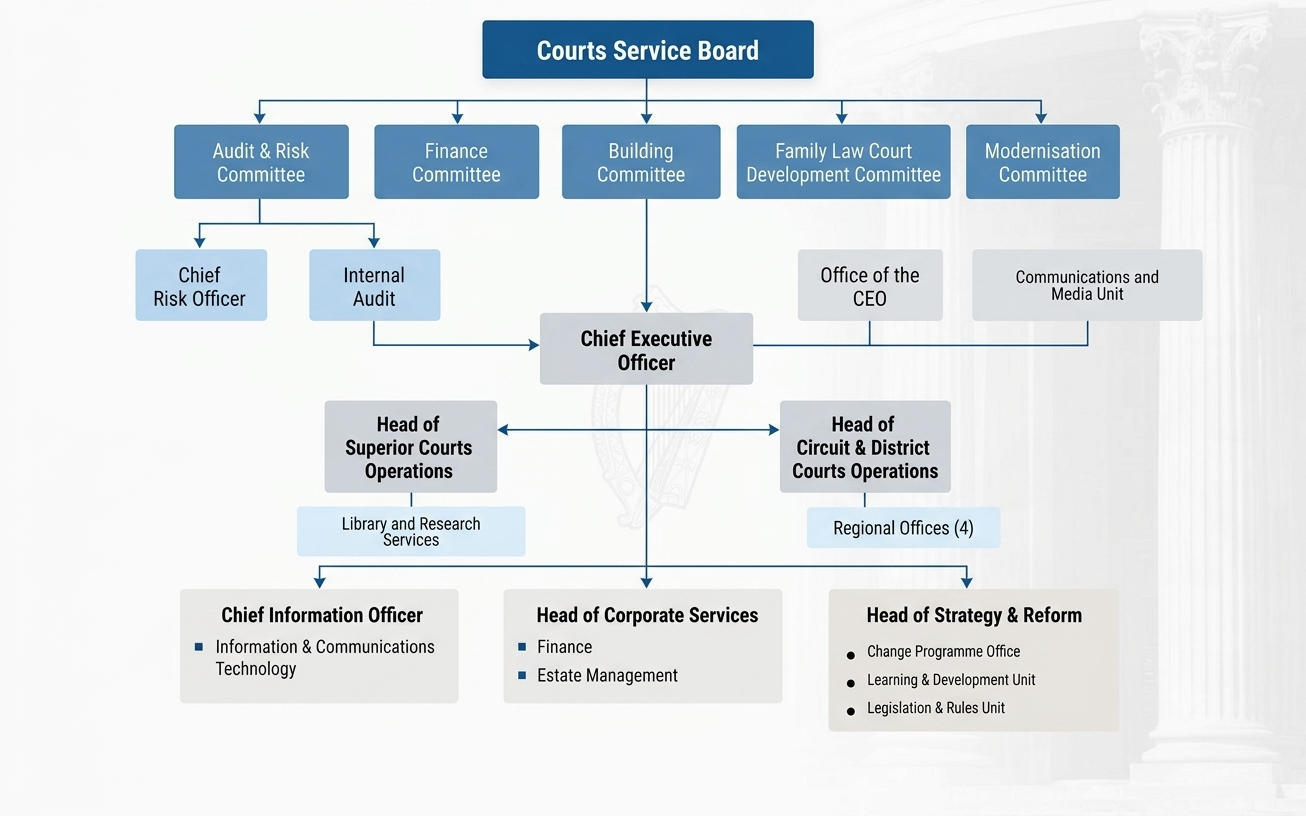
Governance framework
The Courts Service is governed by the Courts Service Board and operates in line with the Code of Practice for the Governance of State Bodies. Our governance arrangements, including the roles of the Board and management, are set out in full in the Courts Service Governance Framework.
Designated public officials (Regulation of Lobbying Act 2015)
The Chief Executive Officer and members of the Senior Management Team are designated public officials under the Lobbying Act 2015. See the designated public officials (Lobbying Act) register.


